
St Mary the Virgin, Denby, Heated by Halo Technology
Background
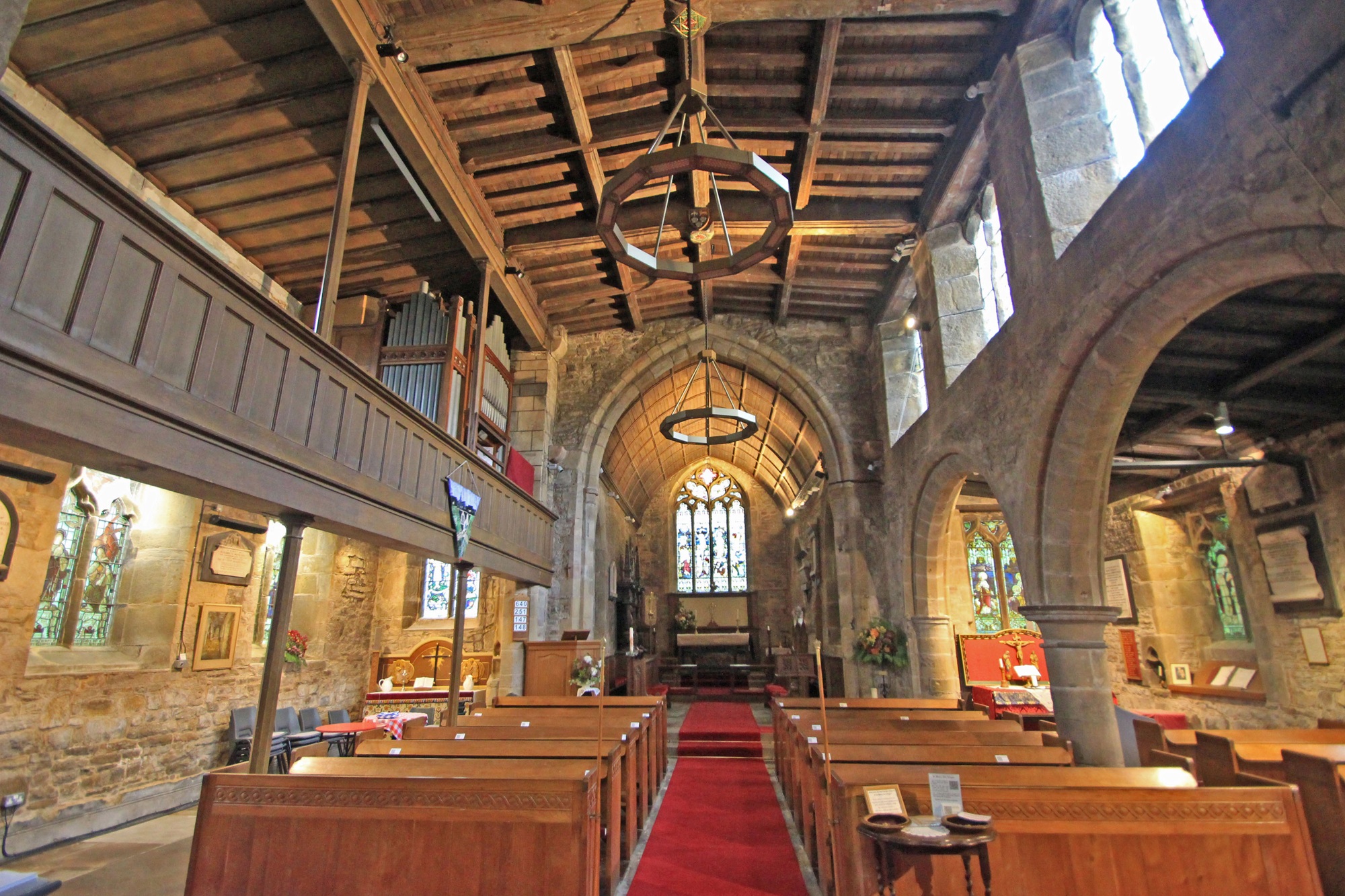
St Mary the Virgin Church in Denby, Derbyshire, is a Grade I listed historic building with almost one thousand years of history. Like many rural churches, it faced a long-standing challenge: heating the building economically, sustainably, and effectively without compromising its heritage fabric.
The previous gas boiler and radiators, many over a century old, could not heat the space adequately with the heat going up and out. Even after six hours of operation before a service, winter services remained uncomfortably cold. Poor efficiency meant significant energy waste with minimal benefit. A specification was written for a new gas boiler system with new pipework and 7 fan assisted convectors. Two quotes were received for a new gas system, however these were significantly higher than expected (between £60,000 and £77,000) which led the church to have a total rethink of their heating options.
Permission to Install New Heating
As a Grade 1 listed church, St Mary’s needed to make a Faculty application to the Derby Diocesan Advisory Committee (DAC). A new heating system needs to provide reliable comfort whilst minimising energy consumption and carbon emissions, in accordance with the Church of England’s Net Zero 2030 target, and comply with conservation regulations.
Detailed documentation was produced including:
- Project Overview & Plan
- Background & Options Appraisal (including the Five Ws)
- Specification (2 documents)
- A Statement of Significance
- A set of photographs
- A completed Church of England Checklist called the Practical Path to Net Zero Carbon.
The DAC asked a few questions before accepting the proposal.
Evaluating the Options
The Options Appraisal evaluated all potential heating systems and energy sources, including electricity, gas, and air-source heat pumps, solar panel integration, radiators, underfloor heating, infrared panels, and heated pew systems.
Two members of the church had heard about the Halo heating trial in a Bristol church and subsequently visited the Herschel Production Facility early in 2023 to understand the infrared technology.
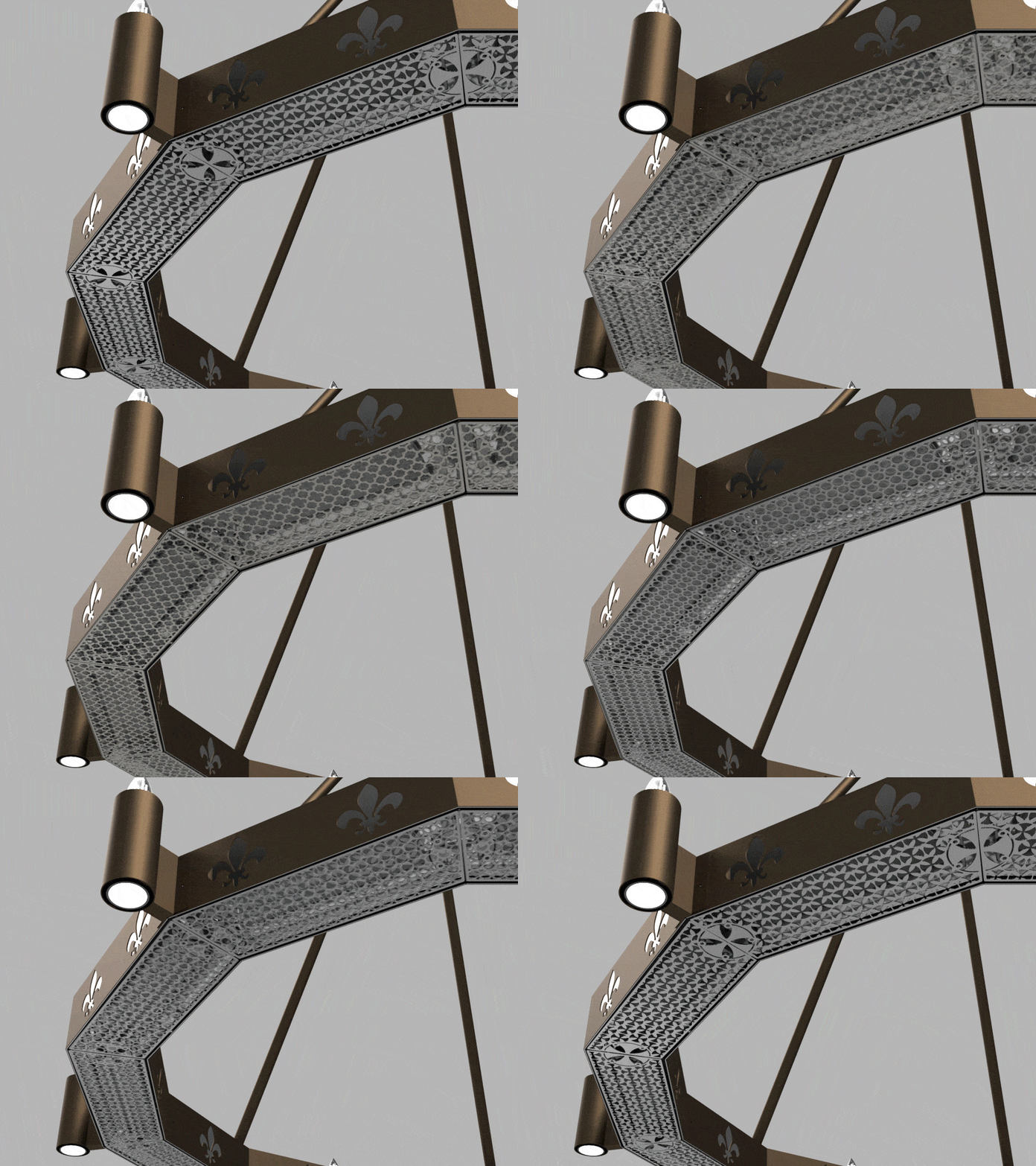
A detailed quote on the Halo infrared heating solution was produced which was almost 40% less than the gas/radiator system.
Infrared electric heating emerged as the most viable and sustainable option, with savings due to a faster warm up time and substantially less power than a conventional radiator system. Compared to the old gas system, the Halo infrared system was calculated to deliver:
-
66% reduction in running costs
-
88% reduction in carbon emissions
The Parochial Church Council (PCC) completed the decision-making, planning, and documentation over an eight month period. The Faculty process took four months.
Funding and Project Delivery
Securing funding was the most time-consuming element, taking nearly five years in total. St Mary’s successfully obtained grant support from:
-
The Benefact Trust (£3,250)
-
The Garfield Weston Foundation (£5,000)
-
The Raymond Ross Fund (Diocese of Derby) (£5,000)
-
Derbyshire County Council Members’ Community Leadership Scheme (supporting early specification work) (£500)
Installation was completed within four months, including removal of all existing cast-iron pipework and radiators. Coordination with the electricity supplier for a meter upgrade proved to be the most challenging logistical task.
Results
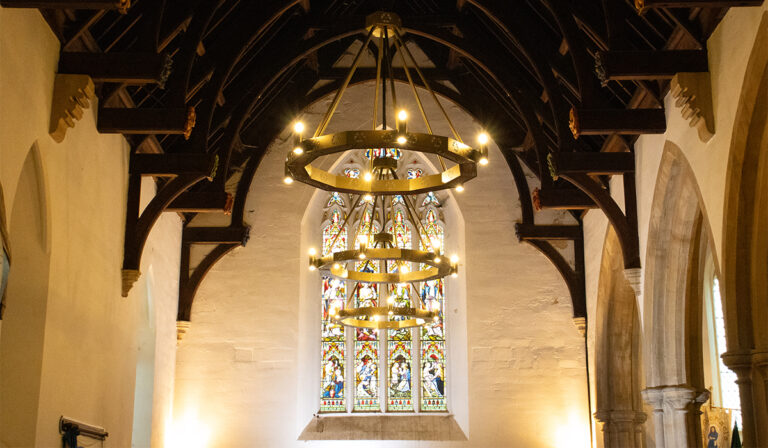
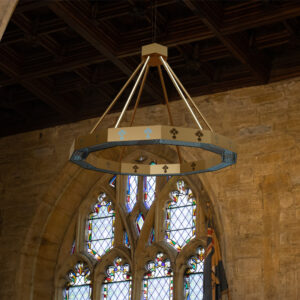
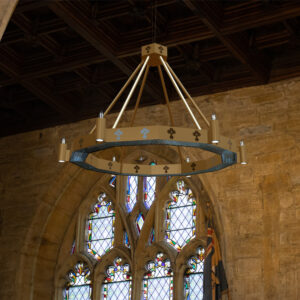
The results following completion of the installation in August 2024 have been highly positive. The Halo infrared heaters have provided rapid, effective heating.
“The experience throughout the 2024/25 winter months was that the main Halo heaters in the nave work very well. In addition, the Summit heaters in the south aisle and chancel provide much improved heating.“
The church is reviewing the performance of the smaller Aspect units in the north aisle and may add an additional unit.
Since the heating upgrade, there has been a marked increase in events during the winter months. This is a direct result of the improved heating and was one of the original objectives.
A Model for Other Historic Churches
Many historic and rural churches face similar challenges of how to heat a building, used a few times per week, efficiently and with lower carbon emissions. St Mary the Virgin, Denby, demonstrates that infrared heating technology can provide a practical, low-carbon solution that respects heritage constraints.
Herschel would like to express their huge thanks to Dave Curtis, Churchwarden, and the team at St Mary the Virgin for sharing their Halo heating story with us. St Mary the Virgin is also happy to share with others the calculations which proved the extent of the carbon reductions.
More Projects Like This
Featured Products
-
5 Year WarrantyVariable power optionColour OptionsMade to Order

 View Product
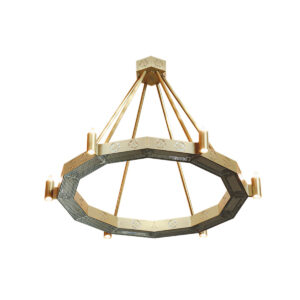
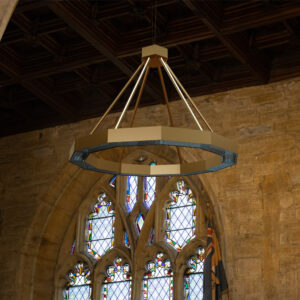
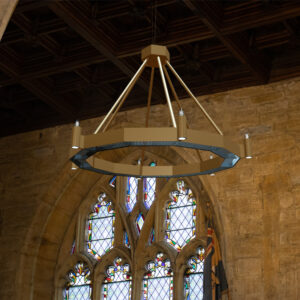
Halo Infrared Heater
BYPOA