How One Historic Church Cut Heating Energy by Over 50% on its Journey to Net Zero
St Peter’s Scottish Episcopal Church demonstrates how listed places of worship can reduce carbon emissions, lower running costs and improve comfort without compromising their historic character.
Across the UK, churches face a common challenge. Ageing gas boilers are reaching the end of their working lives. Energy costs remain unpredictable and maintenance bills continue to rise. At the same time, churches are being encouraged to play their part in achieving ambitious Net Zero targets while protecting some of the nation’s most beautiful heritage buildings.
St Peter’s Scottish Episcopal Church in Galashiels offers a compelling example of what is possible following the replacement of its ageing gas heating system with Herschel Infrared’s Halo heating system. Since the Halo installation, the church has reduced heating energy consumption by more than 50%, significantly lowered maintenance requirements and created a more comfortable environment for worship, all while respecting the character of its 175-year-old listed building. Watch the video testimonial here.
A Challenge Shared by Thousands of Churches
The issues facing St Peter’s will sound familiar to many churches across England, Scotland and Wales. Its gas heating system was more than 25 years old, becoming increasingly unreliable and expensive to maintain.
Peter from the Church Buildings Team explains:
“The gas heating system was very expensive to run, very expensive to maintain, and was getting to the point where we couldn’t get spares very easily.”
Rather than replacing one fossil fuel system with another, the church chose to investigate technologies that would support its long-term environmental ambitions. Historic churches present unique heating challenges. Large internal volumes, high vaulted ceilings, stone walls and intermittent occupancy make conventional heating, heating the air, particularly inefficient. St Peter’s researched a wide range of heating technologies, including air source heat pumps, air-to-air systems, electric heating and infrared heating, ultimately selecting Herschel Infrared heating.
The Difference with Infrared Heating
Unlike traditional heating systems that warm the air, infrared heating delivers radiant warmth directly to people, pews, floors and internal surfaces. For churches that may only be occupied for a few hours each day or week, this approach can significantly reduce energy demand while improving comfort.
Peter describes the difference:
“You begin to feel the warmth within ten to fifteen minutes.”
Previously, the church’s gas system needed to operate for a minimum of two hours before services. Today, the infrared heating can typically be activated around thirty minutes beforehand, reducing both warm-up times and unnecessary energy consumption.
The result has been striking. St Peter’s now consumes well under half the energy previously required to heat the nave and chancel.
Heritage-Friendly by Design
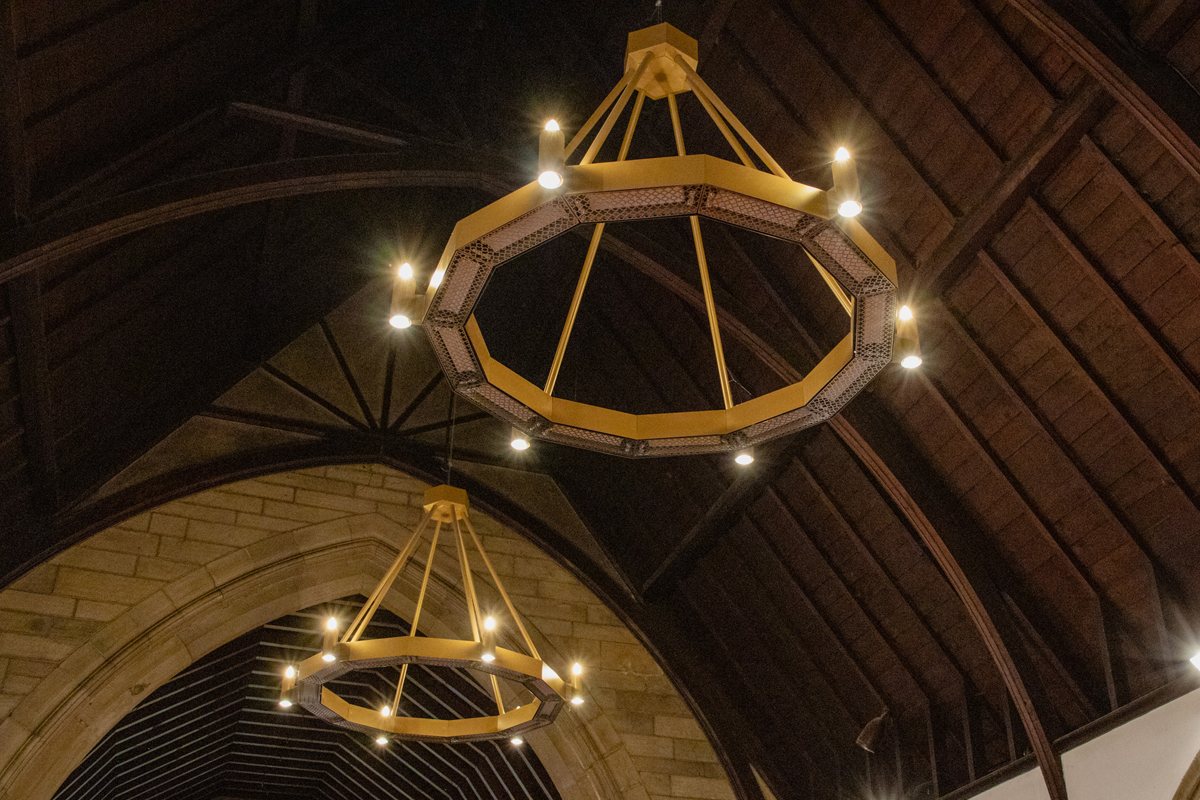
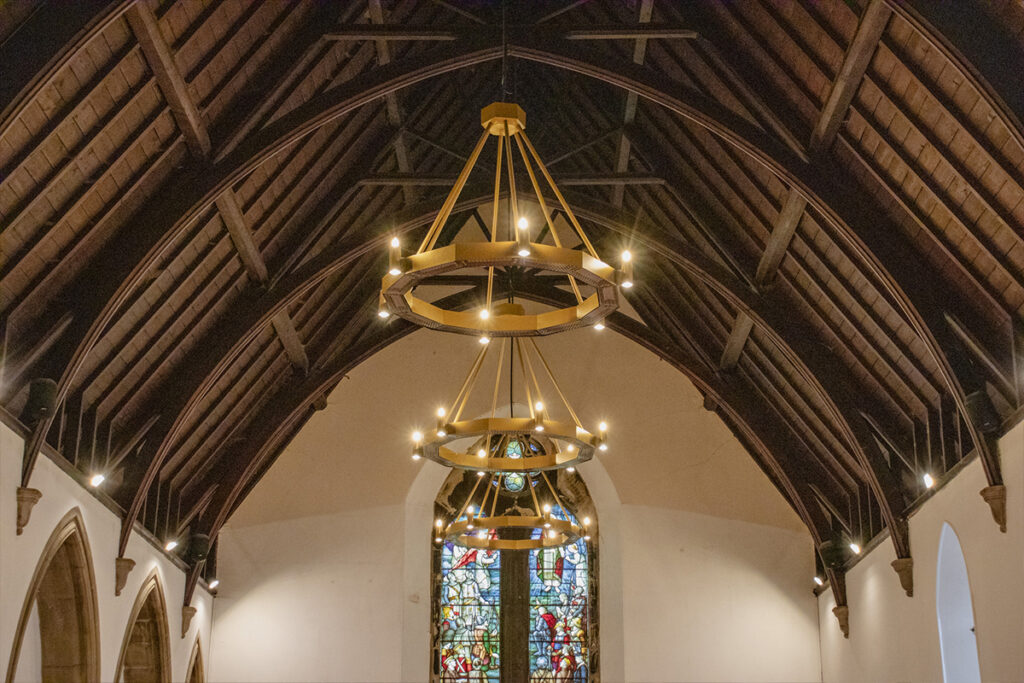
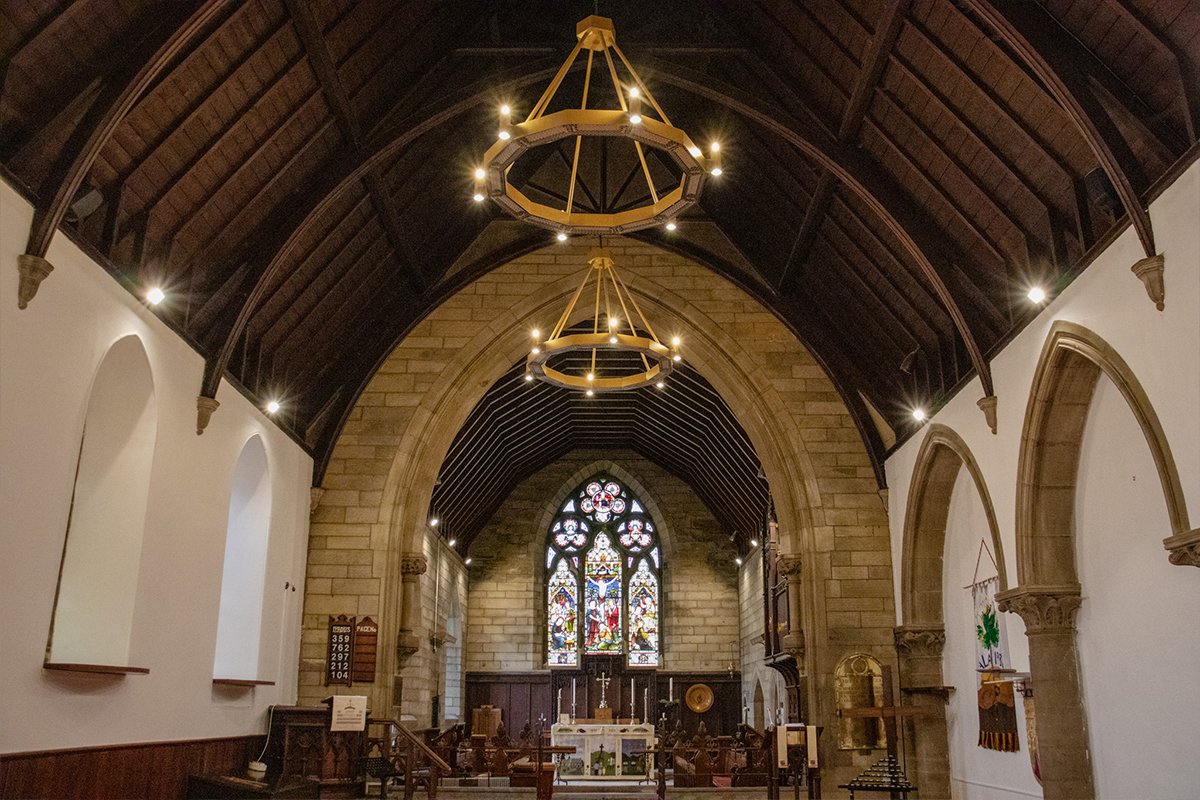
Working within the historic fabric of St Peter’s, Herschel installed three Halo infrared heating chandeliers within the nave, complemented by discreet Horizon infrared heaters all positioned to avoid compromising the church’s historic stained glass.
Peter outlines:
“The Halos look pretty spectacular. The congregation loved them.”
The installation was completed in approximately one week, minimising disruption to worship and community activities.
Lower Maintenance
Historic churches often face increasing servicing costs as boilers age, alongside the risk of unexpected failures during the winter months.
Since installing infrared heating, those concerns have largely disappeared.
Peter explains:
“The maintenance of the gas system was huge. And the maintenance for this system is next to zero.”
Positive Feedback
At St Peter’s, the response has been overwhelmingly positive.
“The feedback has been brilliant.”
Peter concludes:
“Heating old churches and village halls like this with big spaces, poor insulation is tricky. I don’t think that there’s a perfect solution, but I think the infrared is the way to go. Herschel’s system is very good. We had a good project, came in on budget, came in on time. Happy congregation. Even better, a happy minister.”
A Model for Churches Considering Their Heating Decarbonisation
For dioceses, DAC members, heritage consultants and church leadership teams, the project demonstrates what is possible in the search for sustainable heating solutions for historic buildings.
Herschel has worked with churches, cathedrals, listed and heritage buildings across the UK to deliver low carbon infrared heating solutions that balance occupant comfort, energy efficiency and conservation requirements. Every project is designed to meet the specific needs of the building, its users and any heritage constraints. Contact the Herschel Heritage team for further information.